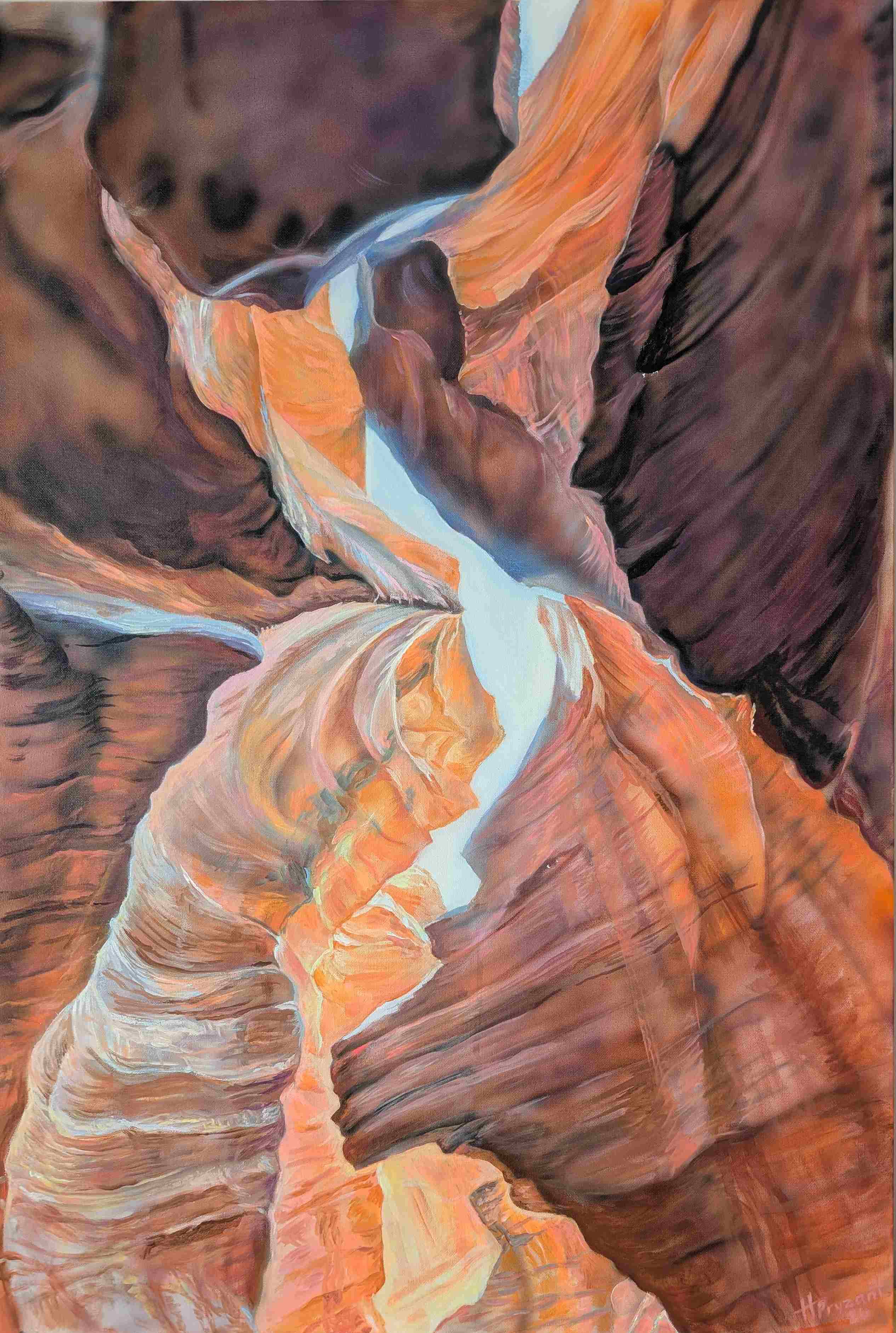
Seeing the Same Place Anew: The Power of Using Multiple Media to Depict Antelope Canyon
Artists have always returned to familiar places, not out of repetition but out of recognition: some landscapes are too rich, too shifting, too alive to be captured in a single attempt. Antelope Canyon is one of those places. Its walls twist like fabric, its colors shift with every passing minute, and its light behaves more like a living presence than a physical phenomenon. For an artist, it is a natural invitation to explore, reinterpret, and reimagine.
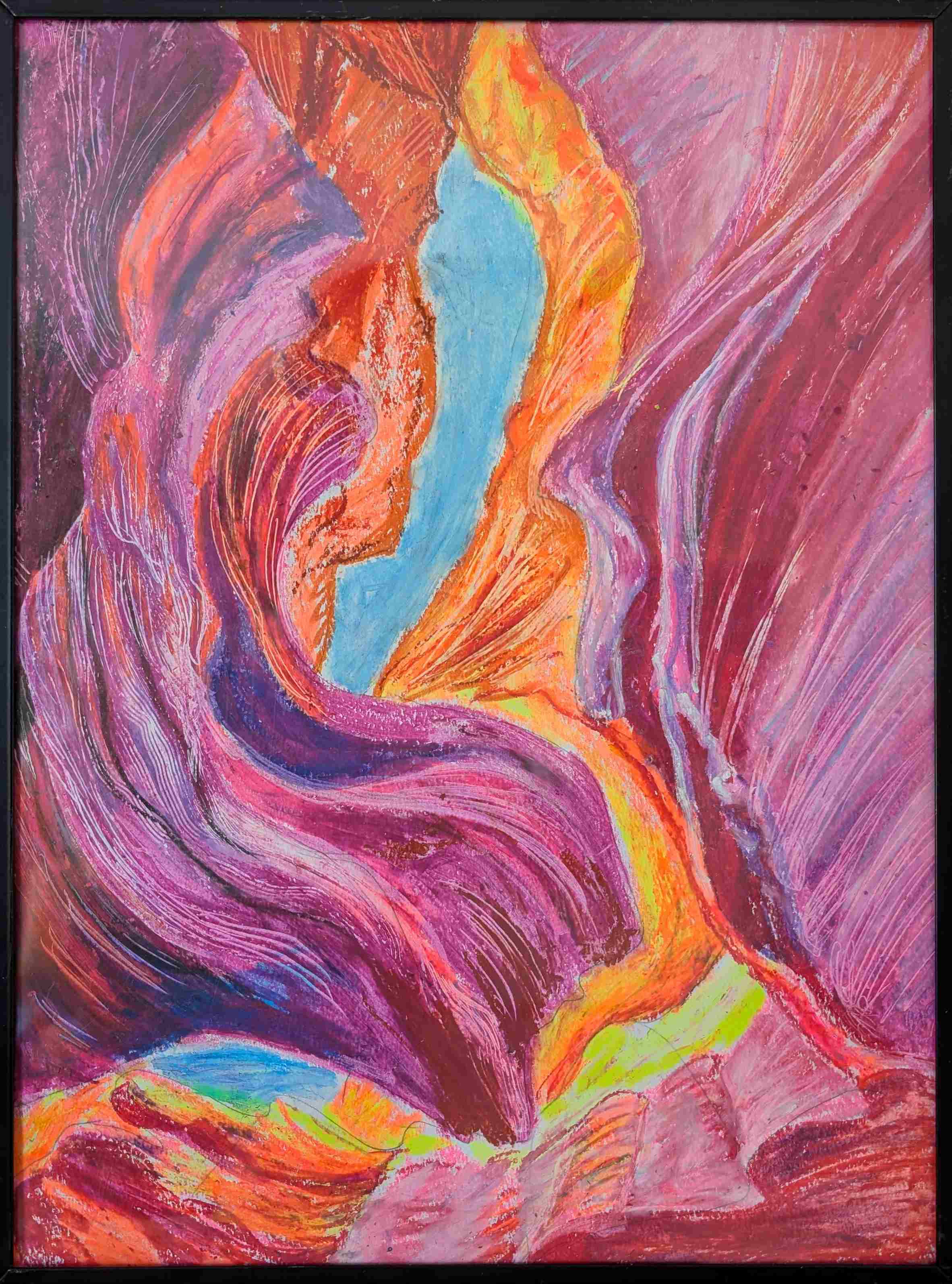
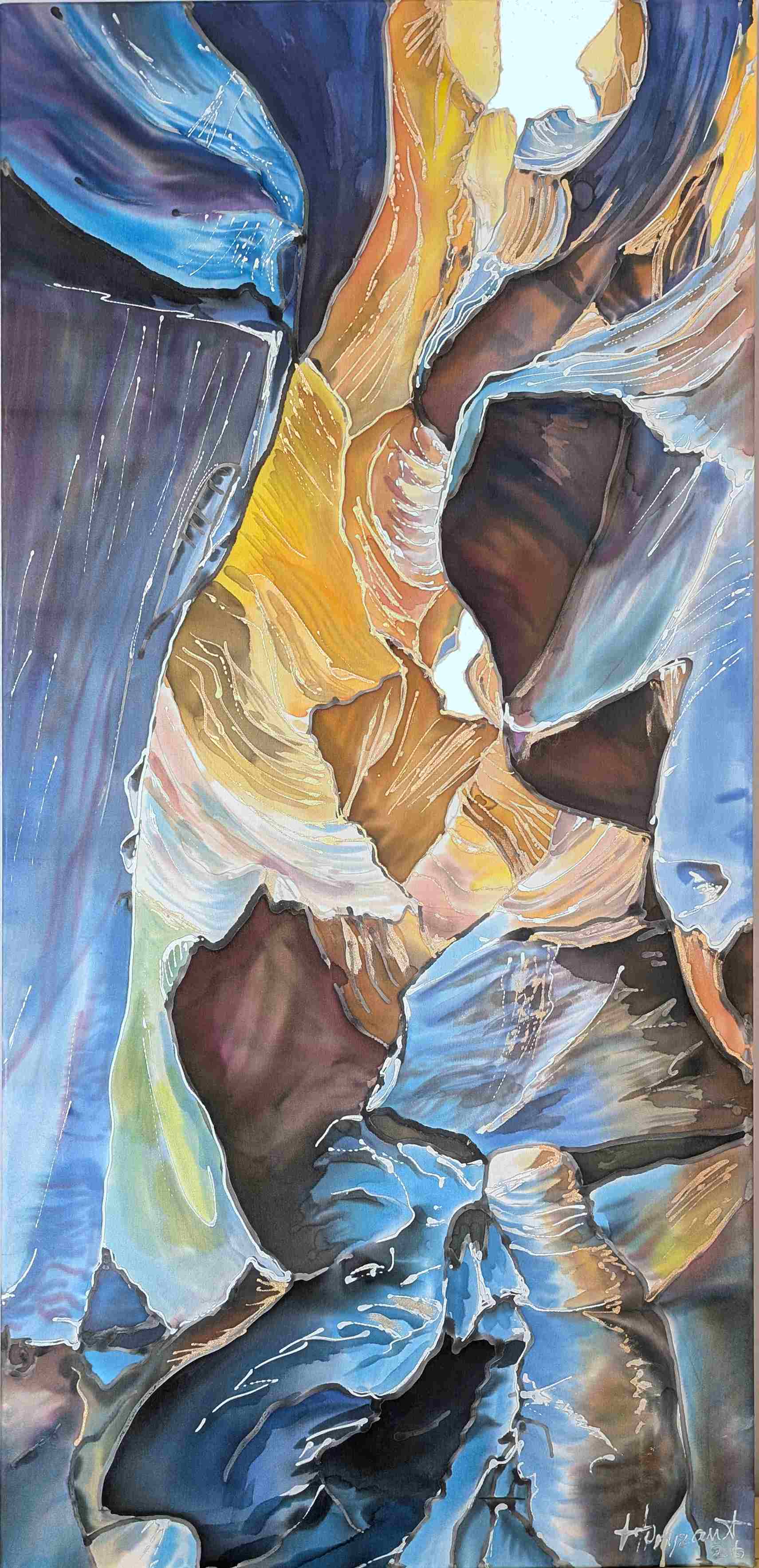
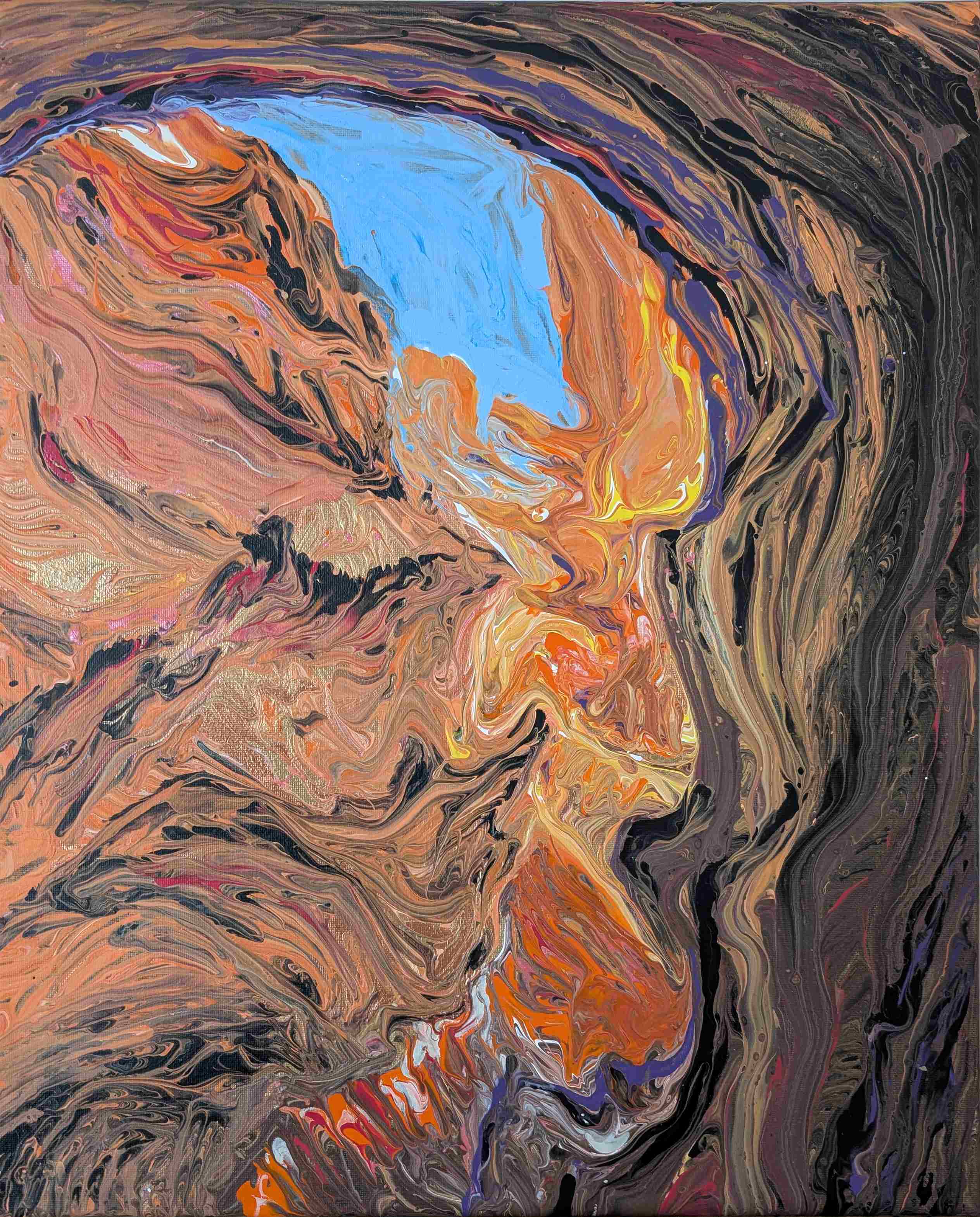
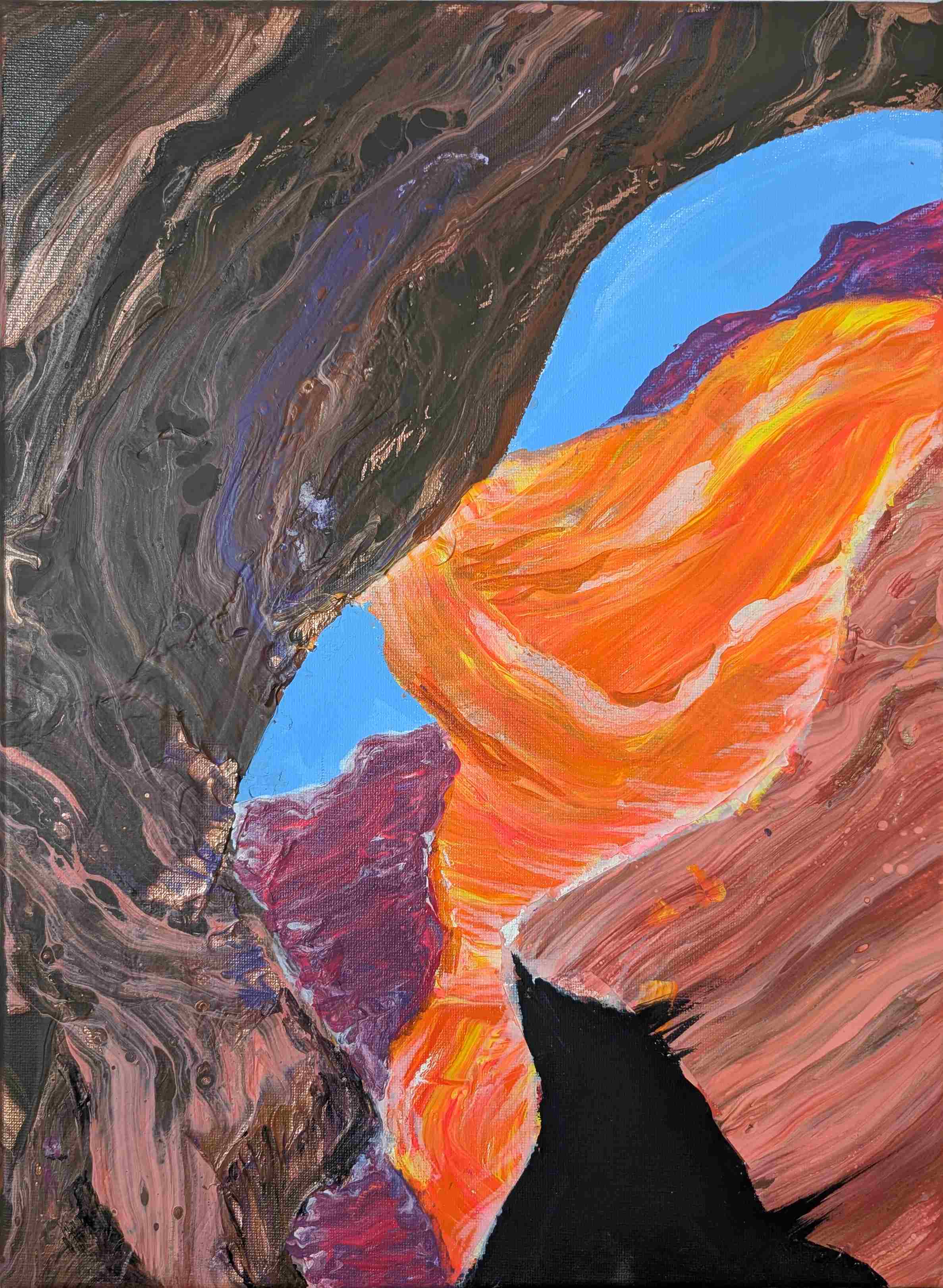
Working across different media—painting, drawing, mixed materials—opens a door to perspectives that no single technique can fully express. Each medium becomes a lens, revealing a different truth about the canyon’s character. My own work on Antelope Canyon demonstrates this beautifully: each piece is unmistakably of the same place, yet each feels like a new encounter.
Media as a Way of Seeing
Every medium carries its own logic. Paint allows for atmosphere, gesture, and emotional temperature. Drawing emphasizes structure, rhythm, and the underlying architecture of the canyon walls. Mixed media introduces dimensionality, echoing the canyon’s layered geological history.
When I paint Antelope Canyon with sweeping, translucent layers, the canyon becomes a living current—fluid, luminous, almost breathing. The brushstrokes mimic the natural erosion that carved the sandstone, while the interplay of warm and cool tones captures the canyon’s shifting light. These works feel immersive, as if the viewer is standing inside the slot canyon, watching the light pour in from above.
In contrast, my drawings distill the canyon into its essential lines and contours. Without the distraction of color, the viewer becomes aware of the canyon’s sculptural qualities—the way the rock folds, twists, and spirals. The drawings reveal the canyon’s bones, its geometry, its rhythm. They show the canyon not as a spectacle of color, but as a masterclass in form.
Multiple Media, Multiple Truths
Using different media to depict the same place is not about redundancy; it’s about uncovering layers of meaning. Antelope Canyon is a perfect subject for this approach because it is itself a layered environment—geologically, visually, and emotionally.
- Paint captures the canyon’s atmosphere and emotional resonance.
- Drawing captures its structure and movement.
- Mixed media captures its physicality and depth.
Together, these approaches create a fuller, more nuanced portrait of the place. They allow the viewer to experience Antelope Canyon not as a single image, but as a multidimensional encounter.
Perspective as Interpretation
Working in multiple media also encourages shifts in perspective—literally and metaphorically. A painting might focus on the dramatic sweep of light from above, while a drawing might zoom in on a narrow passage where the walls nearly touch. A mixed-media piece might emphasize the canyon’s verticality, layering materials to evoke the sensation of looking upward through a narrow shaft of sky.
These shifts in perspective mirror the experience of walking through Antelope Canyon itself. Every few steps, the canyon transforms. A curve in the wall changes the color of the light. A slight turn of the head reveals a new pattern of shadows. By exploring the canyon through different media, you recreate that sense of discovery for the viewer.
The Artist’s Evolving Relationship with Place
Returning to the same subject in different media is also a way of charting your own artistic evolution. Each piece becomes a record of how you were seeing, thinking, and feeling at that moment. The canyon becomes a collaborator in your creative process—constant in its presence, yet endlessly variable in its expression.
My Antelope Canyon works show this evolution clearly. Some pieces emphasize softness and translucency; others highlight contrast and drama. Some feel intimate, others expansive. Together, they form a conversation between me and landscape, one that deepens with every new medium I explore.
Conclusion: Multiplicity as Insight
Using different media to depict the same place is not simply a technical exercise—it is a way of honoring complexity. Antelope Canyon cannot be reduced to a single image, and your work acknowledges that truth. Each medium reveals a different facet of the canyon’s identity, and together they create a richer, more complete understanding of the place.
In the end, the advantage of working across media is simple: it allows you to see more. More color, more structure, more emotion, more possibility. And through your work, it allows the viewer to see more as well.